
Can You Install a Pergola on Concrete, Pavers, or Grass? A Surface-by-Surface Guide
Few outdoor upgrades add as much charm, comfort, and functionality as a pergola. Whether you’re envisioning romantic afternoons under filtered sunlight in a lush garden, entertaining under the stars, or simply expanding your living space, a well-installed pergola can serve as a showpiece in your backyard. If you’re considering this upgrade in Ventura County, CA—from Simi Valley to Oak Park, Thousand Oaks, or Moorpark—you might wonder: What surface works best? Can you install a pergola on a concrete patio, over pavers, directly on grass, or even on a wood deck?
We’ll guide you through everything you need to know, including the pros and cons of each surface, essential installation tips, and local factors that may affect your decision. Read on for a comprehensive, surface-by-surface guide.
Can You Install a Pergola on a Concrete Patio?
Concrete patios are arguably the most common and accommodating surfaces for pergola installation, especially in places like Simi Valley or Thousand Oaks where many homes feature sleek patio spaces.
Why Concrete Works
Strength and stability: Concrete is virtually immovable, providing a solid, level foundation that can easily handle the weight and wind load of a pergola.
Versatility: Suitable for both freestanding and attached pergola designs.
Low maintenance: Concrete requires little upkeep, meaning you won’t have to worry about rotting, insects, or ground shifts affecting the structure’s integrity.
Installation Method
Most often, pergola posts are anchored to the concrete surface using specialized base plates and concrete anchor bolts. Here’s a simplified breakdown:
Mark your layout: Measure precisely where each post will stand.
Drill anchor holes: Using a hammer drill, bore holes in the concrete based on your anchor plate dimensions.
Mount post bases: Secure the base plates with bolts. Make sure each is square and level before tightening.
Attach posts: Insert your pergola posts into the bases and secure according to the manufacturer’s instructions (brands like Bon Pergola and Terra Summer offer detailed guides).
Assemble pergola frame: Connect beams and rafters per your design and supplier instructions.
Local Considerations
Given Ventura County’s (Simi Valley, Oak Park, etc.) general mild weather and contractions and expansions due to temperature shifts, concrete remains a top choice. It also complies easily with local codes—making permitting straightforward.
Can You Install a Pergola Over Pavers?
Paver patios—often seen in Oak Park or Moorpark—are a popular choice thanks to their aesthetic flexibility and ease of repair.
Challenges with Pavers
Movement: Unless pavers are set atop a concrete slab, they can shift over time.
Anchoring: Traditional anchor bolts can’t be used unless that underlying concrete slab exists, requiring alternative strategies.
Installation Options
With Concrete Underlayment
Treat like a concrete surface: If pavers are mortared or set directly over concrete, follow the process described above.
Without Concrete Underlayment
Footing install: The best way is to bore deep footings through the pavers and base material, then fill the hole with concrete and insert a post anchor.
Cut a hole in the pavers using a core drill or masonry saw at each post location.
Dig below the paver base until you reach stable subsoil (typically 18–24 inches deep).
Fill the hole with concrete and set the pergola anchor before the concrete sets.
Replace pavers around the anchor after curing.
Surface Mounting is Risky
While it may be tempting to simply attach post anchors using long bolts and washers through the pavers, this isn’t stable or safe for most installations.
Advice
If you aren’t sure about your paver configuration, consider consulting with a professional pergola installer in Ventura County. They can determine the best anchoring method, ensuring your pergola stands strong for years to come.
Can You Install a Pergola Directly on Grass?

Maybe you dream of a shady garden spot or want a pergola nestled at the far end of your yard in Thousand Oaks. But can you install a pergola directly on grass? The answer is nuanced.
Direct-on-Grass Isn’t Advised
Building directly on grass—just staking your posts into the earth—won’t provide enough stability. Over time, the posts will lean, sink, or rot due to exposure to moisture and soil movement, especially after heavy rains or in irrigation-heavy areas.
Proper Installation Method
The correct approach: Use concrete footings below the frost line.
Dig post holes: Usually 18–36 inches deep, depending on local soil and code.
Set embedded post anchors in concrete: The anchors will hold your wooden or steel posts above the soil, preventing decay and keeping everything level.
Backfill: Once the concrete cures, backfill around the anchors with soil and re-sod or plant grass as needed.
Alternatives
If you want a temporary or seasonal pergola, lightweight pop-up structures can rest on grass—but these aren’t intended as permanent solutions and can’t withstand Ventura County’s wind gusts. For permanent builds in Moorpark or Simi Valley, always anchor deeply into the ground with concrete footings.
Can a Pergola Be Installed on a Wood Deck?
Got a raised deck in Oak Park or Simi Valley? Pergolas can absolutely enhance these spaces, but deck installation brings its own unique challenges.
Key Considerations
Structural integrity: A deck must be able to handle the additional load of a pergola—including wind and possible snow (rare in Ventura County, but possible up north).
Framing attachment: Posts should be attached directly to the deck’s underlying structure, not just the surface boards.
Installation Method
Identify joists: Pergola footings must be anchored down into the joists or beams, not just surface planks.
Use appropriate hardware: Typically, galvanized steel mounting plates or post brackets secured with lag bolts.
Reinforcement: You may need extra blocking or bracing beneath the deck to prevent swaying—especially for larger or heavier pergolas like those from Bon Pergola or Terra Summer.
Professional assessment: Older decks or those in borderline condition may not be suitable for a pergola without significant reinforcement.
Deck-mounted pergolas are ideal for elevated views or to create an “outdoor room” feel.
Which Pergola Installation Surface is Easiest to Work With?
Each surface has its unique challenges and benefits. Here’s a quick ranking for the Ventura County area:
Concrete Patio: The absolute easiest. Straightforward installation using anchors and minimal prep.
Pavers (with concrete base): Only slightly harder than pure concrete, as you may need to remove some pavers.
Wood Deck: Requires more careful planning and possible reinforcement, but still highly practical with the right expertise.
Grass/Lawn: Most labor-intensive due to the need for excavation and concrete footings. However, this allows the most flexibility in location.
If you’re looking for speed and simplicity, a concrete patio wins hands down. If you need something more flexible or decorative, pavers or grass (with proper footings) are still excellent, but they do demand additional work.
Additional Factors to Consider in Ventura County
Whether you’re in Moorpark, Simi Valley, Oak Park, or Thousand Oaks, always consider the following:
City and county permitting: Most municipalities require a permit for a large outdoor structure, especially if it’s attached to your home or exceeds specific dimensions. Check Ventura County’s local building codes before proceeding.
Wind load: Even in generally calm weather, pergolas must be securely anchored to withstand occasional wind gusts.
Sun orientation: In sunny Southern California, think about how shadows will fall on your patio or garden, and whether you’ll need additional shade elements (vines, covers, or custom-built shades).
Soil conditions: Particularly for grass installations, local soil composition can affect footing depth and stability.
Do-It-Yourself versus Professional Installation
While it’s possible for handy DIYers to install a pergola on concrete, pavers, or grass, consider the scope. Proper anchoring, leveling, and code compliance are critical—especially for permanent, heavy-duty structures. Hiring a local professional in Thousand Oaks or Moorpark can save you time, prevent costly mistakes, and ensure a safe, beautiful finished product.
Thinking about a pergola, but don’t know where to start? Check out our gazebo and pergola installation service to connect with expert installers right here in Ventura County.
Popular Pergola Brands for Your Ventura County Home
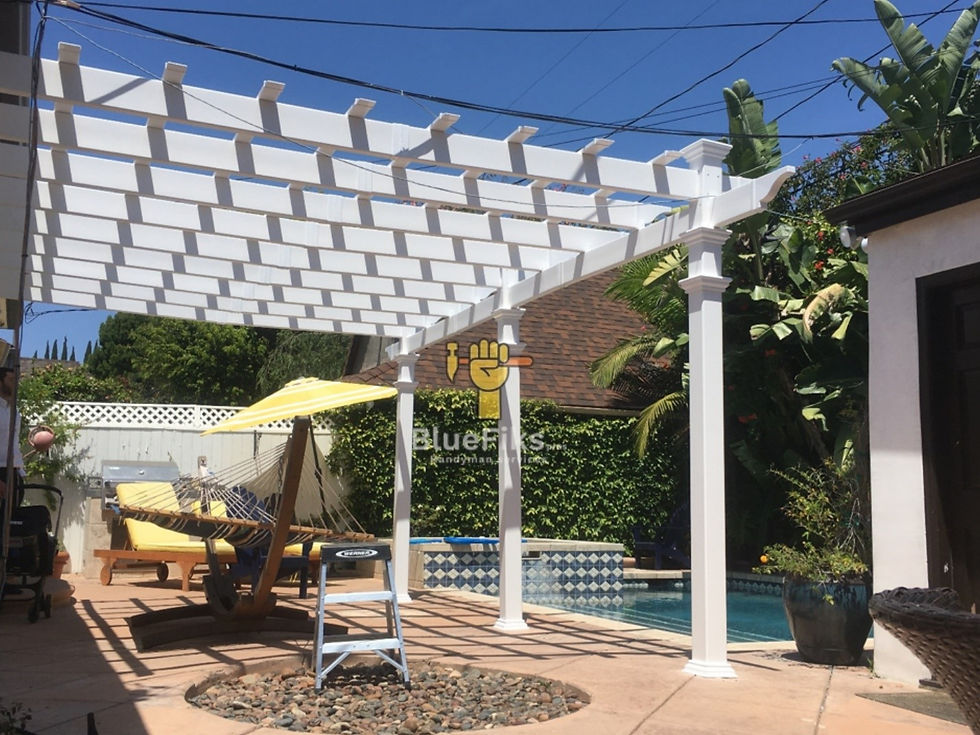
Wondering which pergola brands work well with different surfaces? Here are two that stand out for their versatility and quality:
Bon Pergola: Renowned for both modern and classic aluminum pergola systems, Bon Pergola structures are designed for easy installation on concrete patios, decks, or pavers with sturdy modular designs ideal for both attached and freestanding setups.
Terra Summer: Specializing in high-end, luxury pergolas and outdoor shading systems, Terra Summer products boast innovative mounting hardware for diverse surfaces (including wood decks and concrete pads), plus easy customization for local climate and style.
Both brands are available in Ventura County, with professional installation available via local companies. If you want expert guidance from selection to setup, consult with a BlueFiks Pro for seamless service.
Frequently Asked Questions
Will anchoring a pergola damage my patio or pavers?
If installed properly, minimal disturbance is needed on concrete or mortared pavers. Free-floating methods (sand-set pavers, grass) usually require digging footings, which can be restored or patched after installation.
Can I move my pergola once installed?
Freestanding pergolas on footings can sometimes be relocated, but most permanent installations (concrete anchors, post footings) are designed to stay put.
What about maintenance?
Routine inspection of bolts and anchors, occasional cleaning, and refinishing (for wood structures) is recommended. Brands like Bon Pergola and Terra Summer use rust-resistant powder coatings and weatherproof hardware for longevity.
Conclusion
No matter your surface—from a sleek, modern concrete patio in Simi Valley, charming pavers in Oak Park, a shady grass lawn in Thousand Oaks, or a classic deck in Moorpark—there is a pergola solution that will transform your outdoor space. Each surface requires special installation methods, but with the right planning and, when in doubt, professional help, your backyard retreat can be both beautiful and structurally sound.
Ready to bring shade, structure, and style to your outdoors? For a seamless, stress-free experience, consider working with a local pergola installation expert who understands Ventura County’s unique climate and building codes.
Transform your Simi Valley, Moorpark, Oak Park, or Thousand Oaks backyard and enjoy all the benefits a professionally installed pergola brings—year-round comfort, added value, and that coveted California outdoor lifestyle.


