
Gazebo Installer Near Me: Costs, Permits, and Wind Rules
Key takeaways
Most homeowners pay between roughly $1,500 and $9,000 for a fully installed gazebo, with site prep and permits often billed separately.
A gazebo under about 120 to 200 square feet usually skips a permit in most states, but attaching it to a house or deck or adding a concrete foundation usually triggers one.
Arizona's new HOA law, effective September 2026, stops associations from banning backyard shade structures like gazebos.
Soft-top gazebos handle far less wind than hardtop models, so anchoring quality matters as much as the structure itself.
Asking a gazebo installer near me about wind rating and anchoring method is as important as comparing price quotes.
Searching for a gazebo installer near me? Expect to pay roughly $1,500 to $9,000 for professional installation depending on size and site conditions, confirm whether your city requires a permit first, and ask how the structure will be anchored for wind. These three questions matter more in 2026 since permit rules, HOA law, and wind standards have all shifted in the states where BlueFiks Pros works.
This guide skips the basic "how do I vet an installer" checklist, since that ground is already covered in our homeowner's checklist for finding reliable gazebo installation and our piece on choosing the right gazebo professional. Instead, it focuses on what those pages don't: current cost ranges, the newest permit and HOA changes, and the wind facts that actually affect how long your gazebo stays standing.
What Does a Gazebo Installer Near Me Actually Cost in 2026?
Cost guides vary widely, which is exactly why you should think in ranges rather than a single number. The national average for a 10x10 structure sits around $7,500, with most homeowners spending between $5,000 and $10,000, according to Inch Calculator's 2026 cost guide. Angi's 2026 data shows a lower average of $4,708, with a broad spread from $400 to $15,500 depending on size and materials, per Angi's gazebo cost article.
Labor alone for a local pro typically runs $70 to $250 per hour depending on landscaping and equipment needs, according to Angi. A simpler wood-kit assembly, the kind many homeowners order from a big box store, often runs lower than a full installer's rate, while hiring a full installer for the whole project, from unpacking to anchoring, typically runs $1,500 to $9,000.
Two costs people forget to budget for:
Site prep and leveling: often adds a separate cost if your yard needs grading or a base built before the gazebo can go up.
Permits: required in some cities, plus possible delivery and setup fees for a prefab kit, according to HomeAdvisor's 2025 cost data, which puts the typical homeowner spend between $1,815 and $8,246.
A fully custom build, as opposed to a standard kit, costs noticeably more than a base installation, so it pays to be clear with an installer about whether you want a kit assembled or a custom structure built from scratch.
Permit Rules: What Changed for 2026
Permit thresholds are one of the most confusing parts of gazebo shopping, partly because the rules differ by city, not just by state. The general pattern across most of the country, including California, Arizona, Georgia, and Washington, is that a gazebo under roughly 120 to 200 square feet usually does not need a permit if it is freestanding, has no electrical, plumbing, or gas connections, is single-story, and sits in a rear yard that meets setback rules. Go above that size, add a permanent concrete foundation, attach it to your house or deck, or place it near a property line, and a permit is usually required.
California has a specific update worth knowing about. The 2025 California Building Standards Code, known as Title 24, was published July 1, 2025, and became effective January 1, 2026, according to coverage from a California gazebo permit guide. Under the updated energy code, any roofed structure enclosing 75 square feet or more now faces extra requirements, including cool-roof reflectivity standards and ventilation rules if the structure is enclosed. Most structures under 120 square feet, about 11x11 feet, are still exempt from a full building permit, though coastal cities like Malibu require Coastal Commission review, and fire-zone areas such as Berkeley's hills add their own restrictions, per California's gazebo permit rules.
If you live in California, our guide on choosing the right gazebo size can help you plan dimensions with these thresholds in mind before you order anything.
Arizona's New HOA Law
Arizona homeowners got a real win in 2026. Governor Hobbs signed House Bill 2342 into law in late May 2026, adding a new section to the Planned Communities Act. Once the law took effect in September 2026, an HOA can no longer prohibit a homeowner from installing or using a shade structure in their backyard, including gazebos, umbrellas, and canopies, regardless of what the community's governing documents say, according to reporting on the new law. Associations are now required to act reasonably and without favoritism when reviewing architecture and landscaping requests. If your HOA previously denied a gazebo request in Arizona, it may be worth asking again.
Arizona's patio and shade-cover rules also carry a wind-engineering angle: because monsoon season regularly produces gusts over 60 mph, many Arizona cities require shade structures to be engineered for a 115 mph ultimate wind speed, per Arizona's patio permit guide, which is a good segue into anchoring.
Wind and Anchoring: The Part Cost Guides Skip
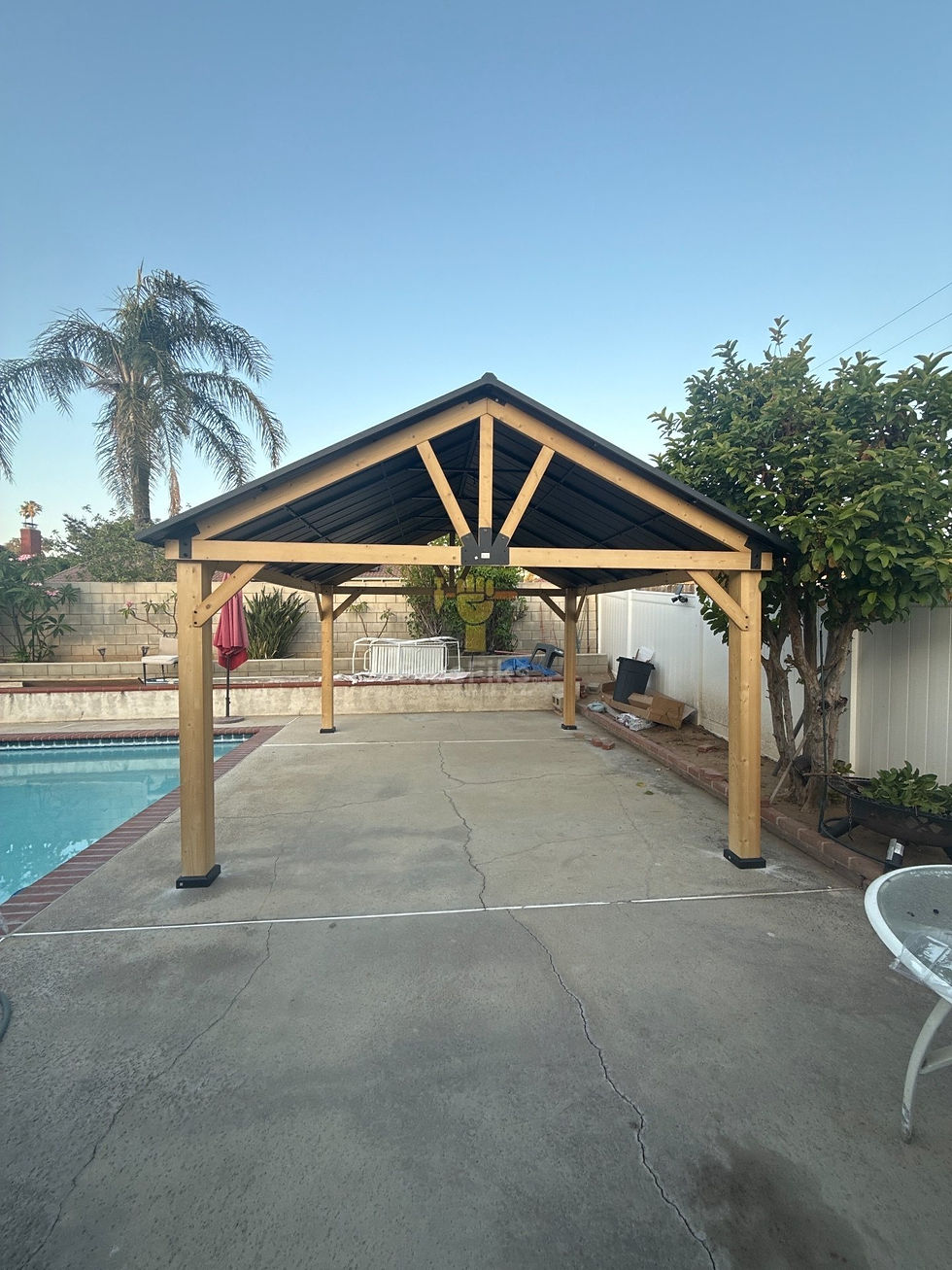
A gazebo is only as good as its anchoring, and this is where many DIY installs fall short. The National Weather Service issues a High Wind Warning once sustained winds reach 40 mph or gusts hit 58 mph, a useful benchmark for deciding whether to secure or take down a lightweight structure. Soft-top gazebos, the kind with a fabric canopy, generally handle only 25 to 30 mph of wind safely, while hardtop models, built with rigid roofing, can often withstand winds up to around 70 mph when properly anchored, according to wind-rating comparisons from a gazebo wind-resistance review. Engineered models on the market carry wind ratings anywhere from 65 to 110 mph, so it is worth asking a seller or installer for that number directly rather than guessing.
No backyard gazebo, however well built, is rated for hurricane or tornado-force winds. When a Wind Advisory or Warning is issued, a pop-up or soft-top gazebo should already be taken down, and even a permanent hardtop gazebo's roof cover may need to be stripped in extreme conditions. This is one reason anchoring quality matters so much during installation, since a structure that is bolted and ballasted correctly performs far better in a wind event than one that was simply set in place. If you want the full picture on anchoring methods, our article on whether a gazebo or pergola needs to be anchored goes into more detail, and our rundown of hardtop versus soft-top gazebos can help you pick the right structure for a windier yard from the start.
Cost and Permit Snapshot by Situation
Scenario | Typical cost range | Permit likely? |
Basic kit assembly, 8x8 to 12x12, no foundation work | Lower end of the range, often under $1,500 | Usually no, under 120 sq ft |
Full professional install, standard kit, including site prep | $1,500 to $9,000 | Depends on size and attachment |
Custom-built gazebo, beyond a standard kit | Higher than a standard kit install | Usually yes, over 120 to 200 sq ft |
Site leveling or grading only | Billed separately from the main install | Not usually permit-related |
What to Ask Before You Hire
Beyond price, a few questions separate a solid installer from a rushed one:
Does the quote include permit paperwork, or is that on me?
What wind rating is this structure designed for, and how will it be anchored to my surface, whether that's concrete, grass, or a deck?
Is cleanup and hardware included, or billed separately?
What happens if a part is missing or damaged in the box?
Review sites covering local installers show that homeowners consistently value clear communication, fast turnaround, and a clean job site when the work is done, while complaints tend to center on vague agreements or slow responses after installation. Reading a company's own reviews, including BlueFiks Pros's reviews on Trustpilot, is a reasonable way to check this before booking.
How BlueFiks Pros Approaches Gazebo Installation
BlueFiks Pros installs gazebos across California, New Jersey, Arizona, Georgia, and Washington, and handles the parts of the job that cost homeowners the most time: leveling the site, assembling hardware correctly, and anchoring the structure to whatever surface it sits on. If you've already read our piece on common gazebo installation mistakes, you know most problems trace back to rushed prep or weak anchoring, which is exactly where a professional installer earns their keep. Getting a price estimate doesn't require a sales call. You can get a FREE Instant Quote, just send a TEXT, book directly through the online booking page, or CALL or TEXT US at (661) 416-8008 with photos of your yard and gazebo kit.
Questions people ask
How much does it cost to hire a gazebo installer near me?
Most homeowners pay between roughly $1,500 and $9,000 for a full professional installation, depending on size, site conditions, and whether it's a standard kit or a custom build. Site leveling and permits are often billed as separate line items on top of that range, according to Inch Calculator's and HomeAdvisor's cost guides.
Do I need a permit to install a gazebo in my backyard?
In most cities across California, Arizona, Georgia, and Washington, a freestanding gazebo under about 120 to 200 square feet without electrical, plumbing, or a permanent foundation usually does not need a permit. Going larger, attaching it to your house or deck, or adding a concrete foundation typically does require one, so it's worth checking your specific city before ordering a structure.
Can my HOA stop me from installing a gazebo in Arizona?
Not anymore. Arizona's House Bill 2342 took effect in September 2026 and prevents HOAs from prohibiting homeowners from installing or using backyard shade structures, including gazebos, umbrellas, and canopies, regardless of what the community's governing documents say. If your HOA denied a gazebo request before this law took effect, it may be worth reapplying.
How much wind can a gazebo handle before it's unsafe?
Soft-top gazebos generally handle only 25 to 30 mph of wind safely, while properly anchored hardtop models can often withstand winds up to around 70 mph. The National Weather Service issues a High Wind Warning at sustained winds of 40 mph or gusts of 58 mph, which is a practical point to take down a lightweight or pop-up gazebo.
Is it cheaper to assemble a gazebo kit myself instead of hiring an installer?
A basic kit assembly can run $450 to $1,400 for common sizes, which is less than a full professional install at $1,500 to $9,000. However, DIY assembly carries more risk of weak anchoring and site prep mistakes, which is where a professional installer's experience tends to pay off, especially in windier regions.
Sources: Cost to Install a Gazebo - 2026 Cost Guide - Inch Calculator · How Much Does a Gazebo Cost? [2026 Data] · How Much Does a Gazebo Cost in 2025? · Gazebo Permit Requirements in California 2026 — Cities & HOAs Guide · California Gazebo Permits: Rules and Costs (2026 Guide) · Arizona homeowners get new protections against HOAs · Patio Permit Requirements in Arizona (2026) · Best Gazebo for High Winds 2026: Options For Outdoor Events & Commercial


